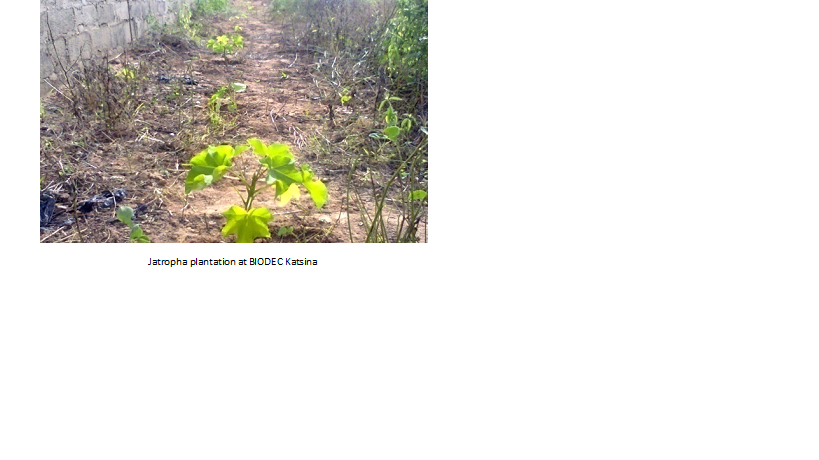
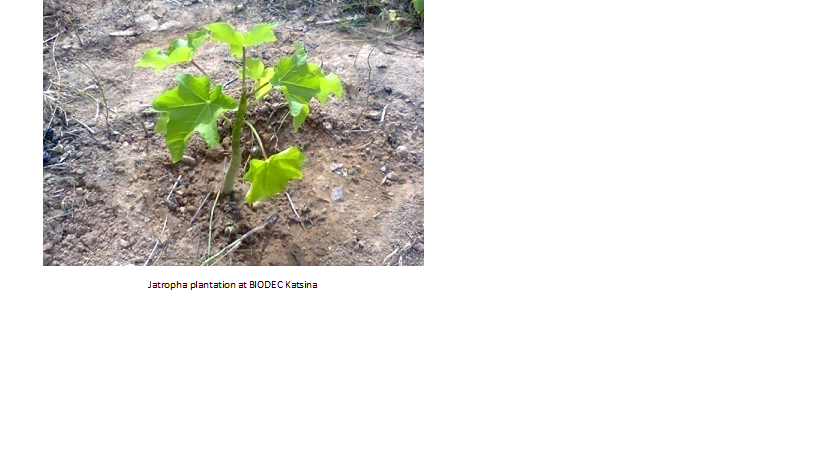
JATROPHA CURCAS PLANTATION AT BIODEC KATSINA
Introduction
Jatropha (Jatropha curcas) is one of the 170 known species that belong to the family Euphorbiaceae. Jatropha is a small shrub tree which has a green leaves and produces latex when the plant is cut. The Jatropha plant derives its name from the Greek word iatros (doctor) and trophe (food) which indicates the plant’s medicinal value in ancient times. The species name ‘curcas’ comes from the name physic nut found in Malabor, India. Jatropha usually grows to a height of 3-5 meters, but under favorable agronomic conditions it can grow up to 8-10 meters.
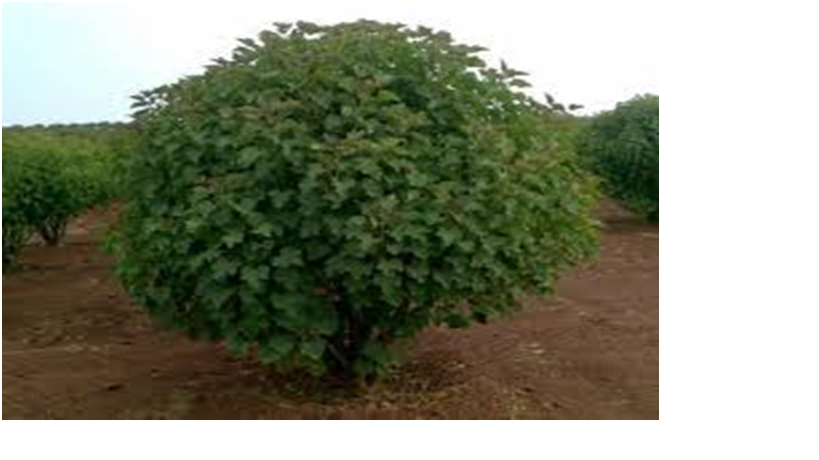
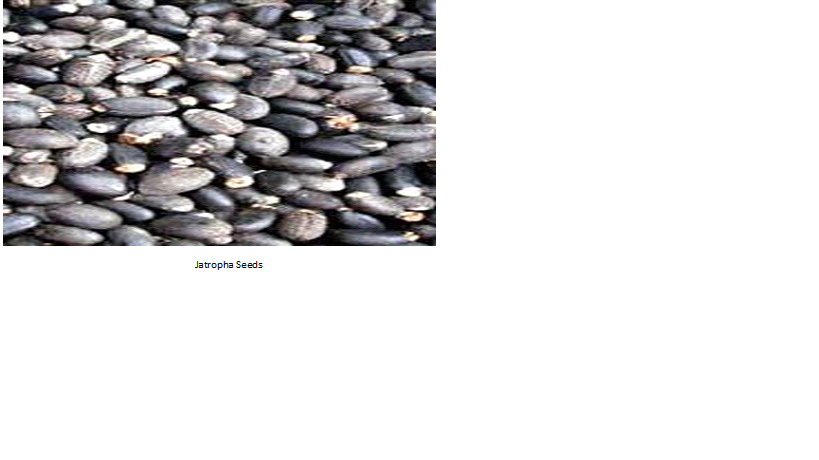
As drought-resistant plant, Jatropha plant has the ability to grow on marginal, wild or arid land and produce seeds that were used for biogas production. The plant has outmost advantage in preventing desertification and soil erosion in sub-Sahara areas like Katsina State.
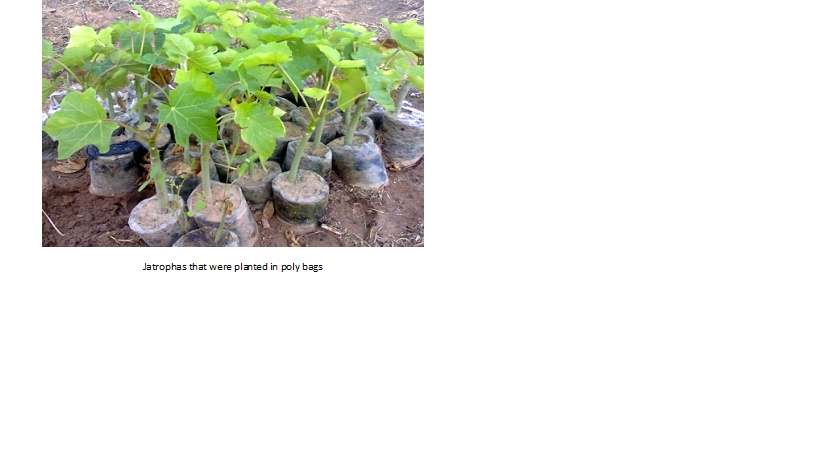
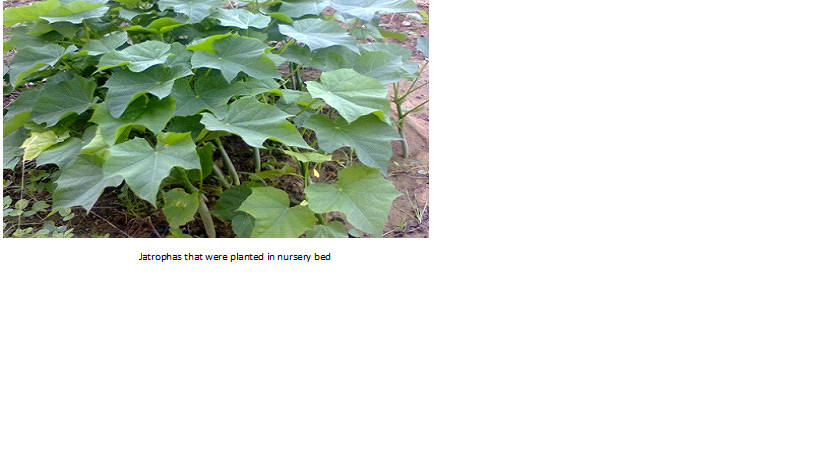
Two methods were used to germinate Jatropha in BIODEC Katsina. These are 1) Planting in to the polybags 2) Direct planting in the nursery bed. The germination was highest in the seeds that were planted directly in the nursery bed compared to those that were planted in the poly bags. Those planted directly in the nursery bed were transplanted within 5 weeks of plantation, while those in the polybags 8- 10 weeks.
Conclusion
As Jatropha curcas is becoming a new perennial cash crop for many regions of the world. There is need to give special attention for jatropha plantation due to its economic importance.
